
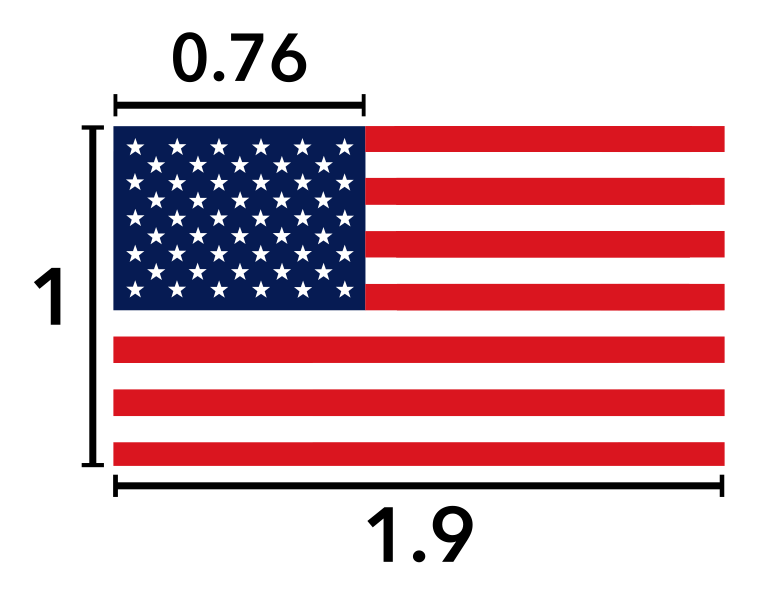
Maybe it goes without saying, but the national flag of the United States is not arbitrary — there are clearly defined dimensions which specify how the flag should look.
One fact that I suppose I should have known, since I view the flag daily, is that the flag is rather long in proportion to its height. Some flags are nearly square, while others, such as the US flag, are long. The proportions of the flag are 10 by 19, which means the US flag is almost twice as long as is it tall. This means the flag should look like this:
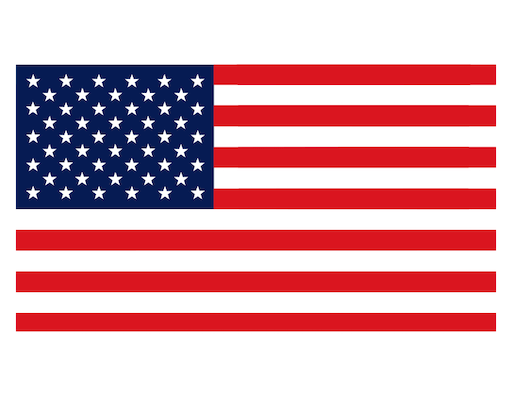
Not like this simplified, nearly square, version that you sometimes see:
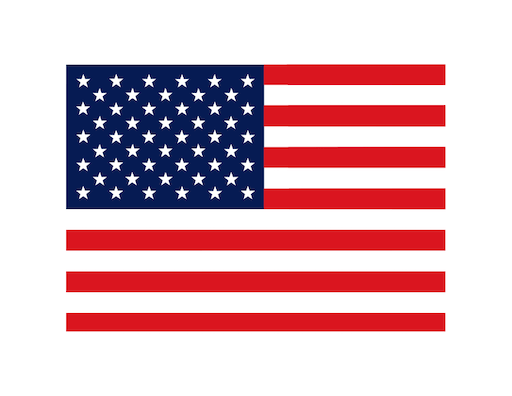
Here is a quick breakdown of the dimensions of the flag:
Flag Proportions
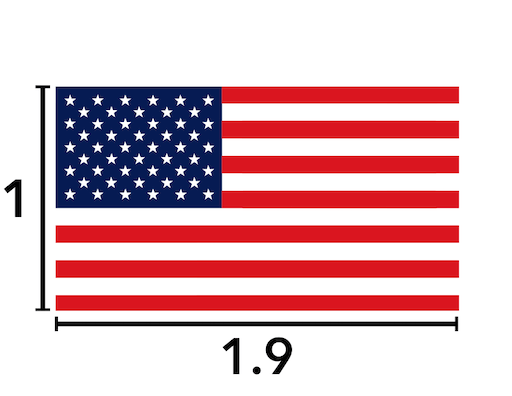
| Dimension | Size |
|---|---|
| Hoist (Height) | 1 |
| Fly (Length) | 1.9 |
Star Proportions
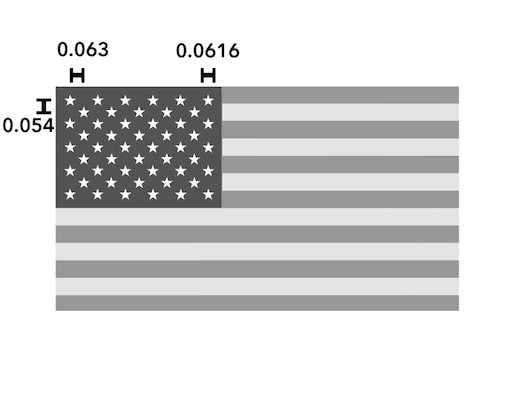
| Dimension | Size |
|---|---|
| Horizontal Distance Between Centers | .063 |
| Vertical Distance Between Centers | .054 |
| Diameter | .0616 |
Stripe Proportions
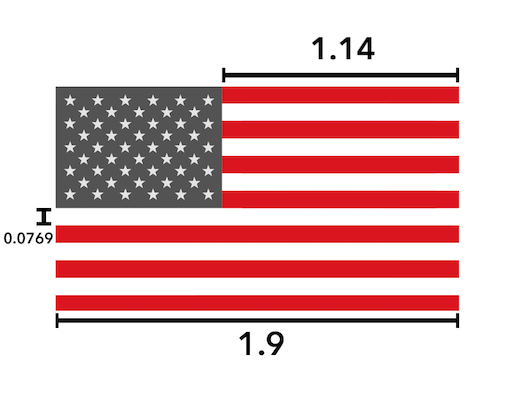
| Dimension | Size |
|---|---|
| Height | .0769 (1/13) |
| Length (7 Upper Stripes) | 1.14 |
| Length (6 Lower Stripes) | 1.9 |
Union Proportions
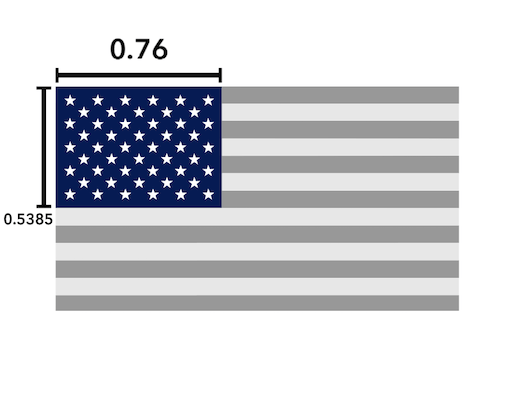
| Dimension | Size |
|---|---|
| Height | .5385 (7/13) |
| Length | .76 |
An interesting thing I noticed is that the stars are arranged into 9 rows and 11 columns, which makes me think of 9/11. Also, the union of the flag is 0.76 times the overall width of the flag, and the stripes are separated into two categories of 7 shorter stripes and 6 longer stripes, which is quite fitting, considering 1776!
Have you noticed anything interesting about the proportions of the United States flag?

