
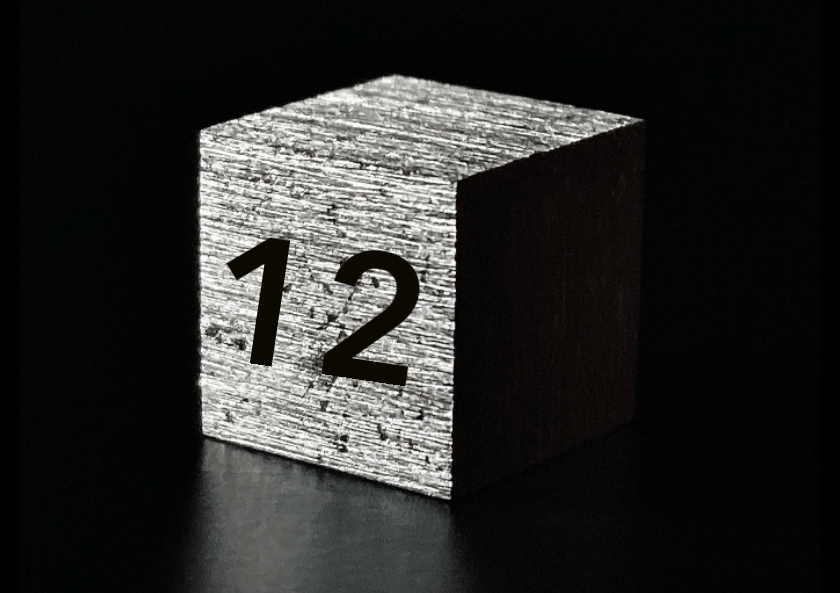
In the summer of 1618, a farmer by the name of Henry Wicker brought his cattle to a small spring for a drink in Epsom, England. Wicker was surprised when his cattle refused to drink this water, and after tasting it, Wicker realized the water was quite bitter. Wicker noticed that a white salt was left behind when the water evaporated, and after some experimentation, Wicker even noticed that this bitter water helped heal cuts and soars. The salt in the water came to be known as Epsom salt.
More than a hundred years later, Scottish chemist Joseph Black was studying another salt, which was a chalky, white mineral that was called magnesia in honor of Magnesia, Greece, where it was discovered. Black had become the first to distinguish this magnesia from lime, which is chemically similar to magnesia.
Finally, in 1808, Sir Humphry Davy applied a current to a solution of magnesia, which produced a silvery-white metal. Davy suggested that the metal should be named after magnesia and proposed the name magnium, however, the metal was later called magnesium. Magnesium was then given the symbol Mg.
The Epsom salt that was discovered in Epsom, England, is simply magnesium sulfate, and the magnesia was nothing more than magnesium oxide.
Properties of Magnesium
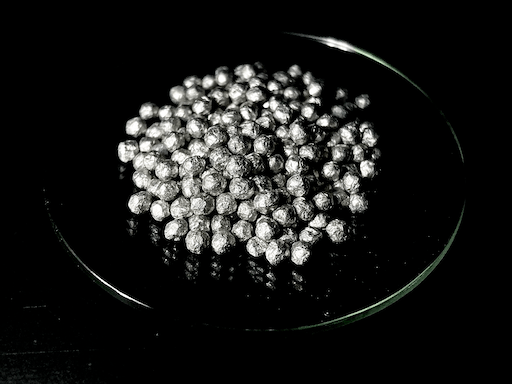
Magnesium is an alkaline earth metal, meaning it is in the second column from the left on the periodic table. This means that its properties are very similar to those of beryllium, calcium, strontium, barium, and radium — this is why it took chemists so long to separate magnesia (magnesium oxide) and lime (calcium oxide). The similarity in chemical properties of magnesium and calcium causes your body to treat the two metals very similarly, which is why there is a decent amount of magnesium in your bones, in fact, calcium isn’t the only element that gives your bones their strength, as magnesium is partially responsible strengthening your bones.
Elemental magnesium can be quite dangerous because it burns with an intense withe flame that reaches roughly 5,600ºF, which is hot enough to emit dangerous amounts of ultraviolet (UV) light that can damage your vision. Furthermore, magnesium will not only burn in air, but it can also burn in an atmosphere of carbon dioxide or nitrogen, in fact, magnesium can even continue to burn under water.
Magnesium is one of the least dense metals, so much so that magnesium is only about 2/3 the density of aluminum.
Magnesium in the Human Body
Not only does magnesium strengthen your bones, but it also helps regulate your heartbeat and blood pressure, aids in muscle contraction and relaxation, and it is required for your body to produce energy.
Foods that are rich in magnesium are leafy greens, legumes, nuts, seeds, and whole grains.
What do you like most about magnesium?

