
During the 19th century, a sample of a mixture of rare minerals from a deposit near Ytterby, Sweden, was being studied. It was discovered that the mixture could be separated into several oxides, one of which was called ytterbia, which was named after Ytterby.
In the late 1870s, the ytteria was reduced and what appeared to be a new metal was discovered, however, in 1907, chemists finally realized that this metal was actually a mixture of two new metals: one was named lutetium and the other was named ytterbium.
Four elements were named after the Swedish village of Ytterby: yttrium (Y), erbium (Er), terbium (Tb), and ytterbium (Yb). The element we are considering today is ytterbium.
Properties of Ytterbium
Ytterbium is the last of the lanthanides, which are the top row of the two rows at the bottom of the periodic table. The lanthanides, which are also known as the rare earth metals, all have similar properties, which is why they are often found mixed together in the same deposit.
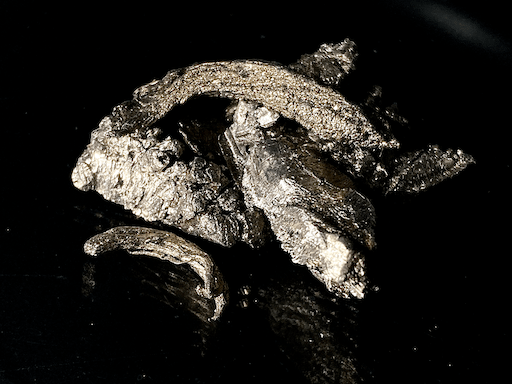
Ytterbium is a soft, ductile metal that is slightly golden in color. Unlike the colorful salts of some rare earth elements such as erbium, most of ytterbium’s salts are colorless.
Though the reaction is slow, ytterbium is apparently one of the few metals that are reactive enough to dissolve in water.
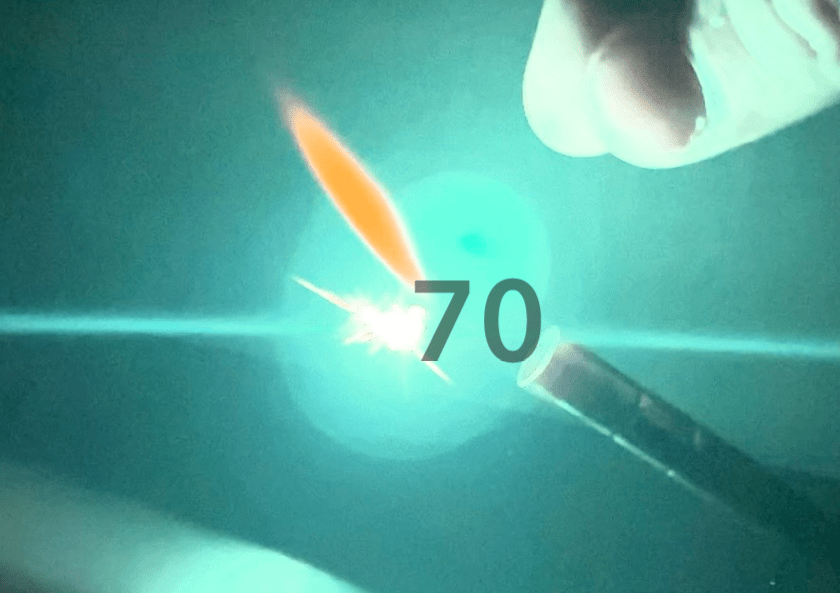
Ytterbium is stable in air, but when the metal is finely divided, it is pyrophoric, in fact, when I burned tiny shavings of ytterbium for this post’s featured image, the metal crackled with an intense, green flash. I feel the featured image I used for this post looks fake, especially because the green flash of light overexposed the image to the point that the only portion of the torch’s flame that is visible is the orange tip, but other than the superimposed “70” and slight color correction, the image is unedited.
Uses of Ytterbium
Ytterbium is used from many things in the modern world, such as producing ultra-precise atomic clocks, manufacturing high-powered lasers for metal cutting, doping stainless steel to increase strength and corrosion resistance, and it is even used as a catalyst to produce plastics, including polyethylene.
What do you like most about ytterbium?

