
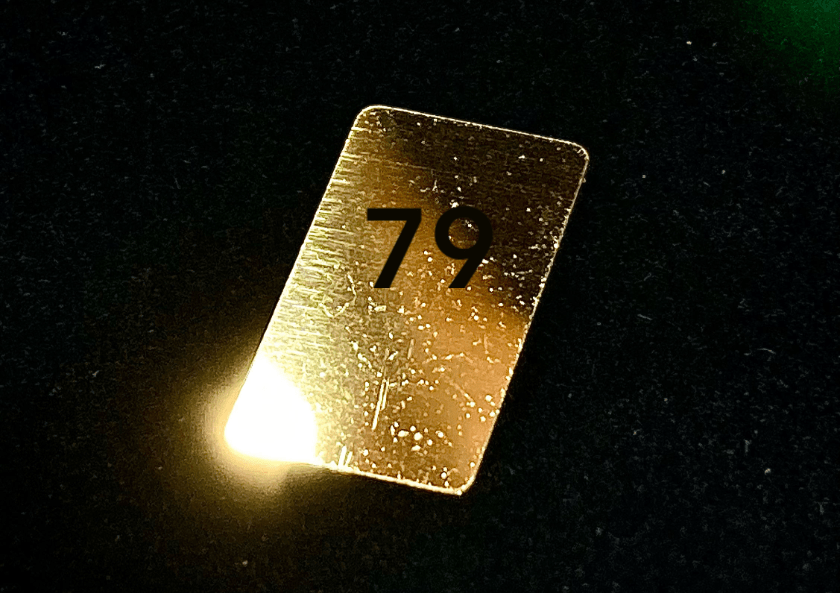
For basically all of human history, a shiny, yellowish metal was used to make jewelry, coins, and sometimes tools. This metal was so chemically resistant that it could be found in its elemental form, especially along rivers.
This metal has always been praised for its beauty and resistance to tarnishing. Some civilizations associated this metal with the sun due to its bright, yellow appearance. The Romans referred to this metal by the name aurum, which is related to Aurora, the Roman goddess of the dawn — likely due to the fact that the metal’s yellow color resembles the yellow hue of a sunrise.
As germanic languages developed, they invented their own words for this metal. It is believed that the metal’s name came from an ancient root word meaning yellow or bright. Eventually the metal was named gulþ in Gothic, guld in Danish, gull in Old Norse, goud in Dutch, and gold in English.
Properties of Gold
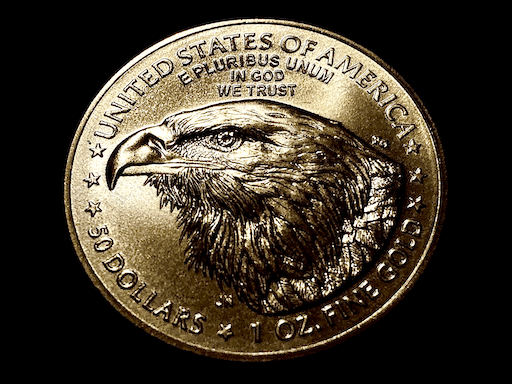
Gold is a rare, dense, malleable transition metal, in fact, gold is the most malleable metal.
Besides the pale yellow of cesium, gold is the only metal that has a yellow color. Gold is one of the most valuable metals, one of the least reactive metals (only platinum is less reactive), and one of the most dense elements — the density of gold is nearly that of tungsten!
Because gold is so resistant to oxidation, corrosion, and acid, it is considered part of a group of metals known as noble metals.
Unlike most metals, pure gold does not form an oxide layer when exposed to the air because it is so unreactive, therefore, pure gold can be cold welded. This means that two room-temperature pieces of pure gold will fuse when hammered together, which happens because there is no oxide layer to prevent the gold crystals of the two pieces from attaching to each other.
Gold can form some interesting compounds, including its yellow and orange salts and the very expensive explosive that is gold fulminate, but due to the fact that gold is so expensive, I sadly didn’t have any gold I was willing to destroy to demonstrate this fascinating gold chemistry.
Uses of Gold
Currently, most of the gold in the world is used to make jewelry, however a portion of the gold is used to make coins and bars for investing and some of it is used for industrial purposes, such as producing electronic components.
Gold in the Human Body
Despite its rarity and the belief that gold is not necessary in the human body, gold is present in each person, particularly in hair, blood, and the liver. In the average human, there is approximately 0.000007 ounces (0.2 milligrams) of gold, which is worth about 4¢ at the current value of gold — this suggests that all the gold contained in each of the 8.3 billion humans combined would be valued at about $300 million!
Gold can enter the human body through drinking water from some sources and the consumption of plants that absorb gold from the soil. Interestingly, some research has suggested that gold may be beneficial to joints and might promote the regeneration of damaged nerves and increase cognitive function.
What do you like most about gold?
 Onward American