
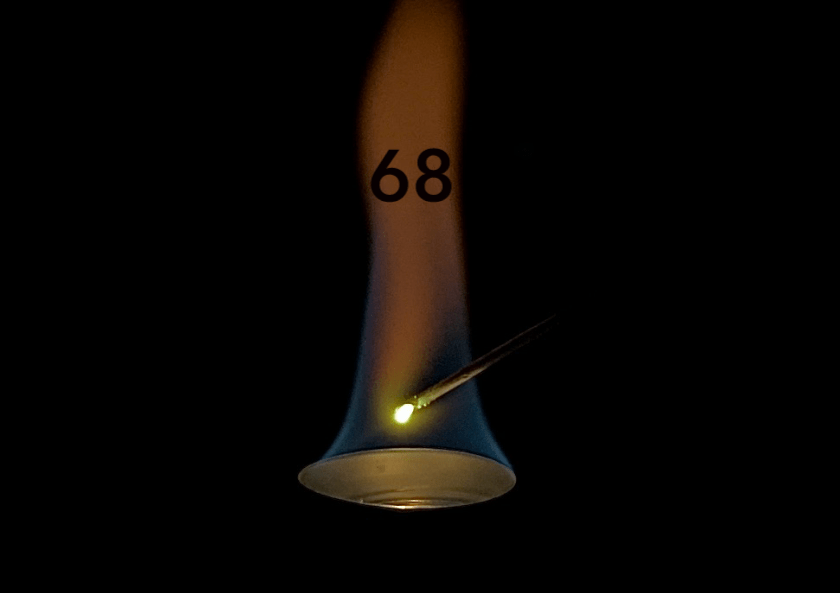
In the early 1840s, a Swedish chemist named Carl Gustaf Mosander was working with a sample of gadolinite near Ytterby, Sweden. Mosander had managed to isolate a substance from the sample, which he correctly identified as being a mixture of several compounds.
Mosander managed to separate this substance into its components, which were three oxides: a whitish oxide called yttria, a yellowish oxide named terbia, and a pink oxide which was given the name erbia. All three of these compounds’ names were derived from the name of the village of Ytterby.
In 1934, two German chemists by the names of Wilhelm Klemm and Heinrich Bommer became the first to reduce erbia and extract a new metal. This metal was named by taking the name of the oxide (erbia) and adding the suffix that was used for newly discovered metals (-ium), making the element erbium.
Properties of Erbium
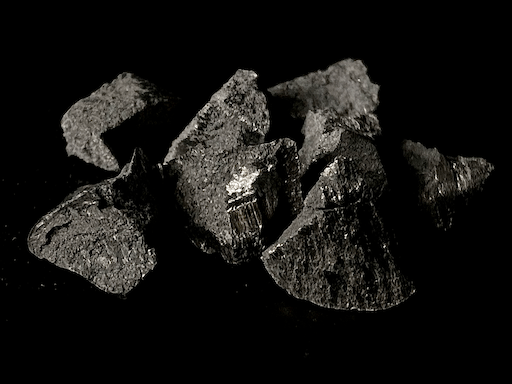
Erbium is a lanthanide; lanthanides are part of a group of metals that are often called rare earth metals. These metals are called lanthanides because the first metal in this group is lanthanum. This means that the properties of erbium are similar to those of lanthanum, cerium, praseodymium, neodymium, promethium, samarium, europium, gadolinium, terbium, dysprosium, holmium, thulium, ytterbium, and lutetium.
Lanthanides are the upper row of the two rows at the bottom of the periodic table. Lanthanides and the row below them (actinides) have unique orbital groups. All elements are either in the s-block, p-block, or d-block, but only lanthanides and actinide are in the f-block, which means the valance electrons of the lanthanides and actinides fill the f-orbitals — in the case of lanthanides such as erbium, the valance electrons fill the 4f orbital.
Erbium Salts
I had never worked with any erbium metal before, and therefore I was excited to see how erbium’s salts looked.
WARNING: please do not attempt to reproduce any of the following chemical reactions without the proper gloves, eye protection, ventilation, and understanding of the dangers of all reactants and products.
First, I used an acid to transform the pure erbium metal I had purchased into a soluble salt, however, I did have to use hydrogen peroxide as an oxidizer to speed up the process.
2 Er + 6 HCl -> 2 ErCl3 + 3 H2
The solution that was left behind was a very faintly pink liquid. I then reacted the erbium (III) chloride in the solution with some sodium carbonate.
2 ErCl3 + 3 Na2CO3 -> Er2(CO3)3 + 6 NaCl
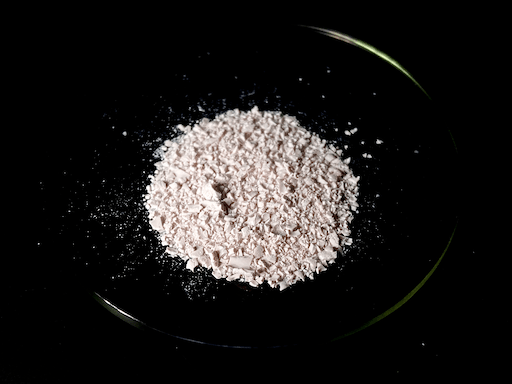
Erbium carbonate is unique in that it has a very soft pink color — I promise this is erbium carbonate and not strawberry Nesquik powder! This salt is pink due to the presence of erbium ions in the +3 oxidation state.
Uses of Erbium
Erbium compounds are used in lasers to cause them to only emit light in a spectrum that can be used for tattoo removal and enamel ablation without causing excess damage to the surrounding tissues. Lasers containing erbium are also used for fiber-optic telecommunications, laser cutting, and even welding.
Erbium oxide is sometimes used to produce pink ceramics; erbium oxide and erbium carbonate are also used as doping agents to make pink glass.
Erbium can be added to titanium and vanadium to make an alloy with reduced hardness and increased pliability.
What do you like most about erbium?
 Onward American