
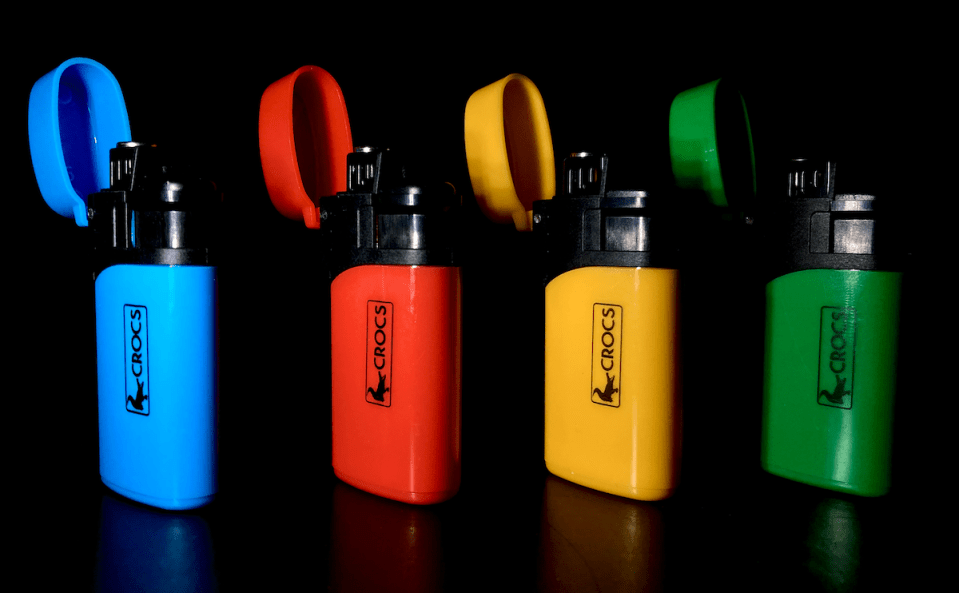
Recently, I received a gift that was a set of four lighters that each emit a different flame color.
These lighters are fascinating to look at as you don’t often witness flames with these colors, but they may otherwise seem like a gimmick; while they may be a gimmick, I immediately realized the simple yet amazing chemistry at play.
I haven’t researched what the company uses to produce these colors, but I believe I have a pretty good idea of how they achieved these colors after all of the flame tests I have performed. Let me share a quick explanation for each color.
Blue

This is the most simple color of the four; the blue flame is almost certainly produced by the butane torch without any additives. When the butane burns in this torch, the combustion is complete, emitting a blue flame rather than the yellow flame indicating an incomplete combustion of standard lighters.
Red
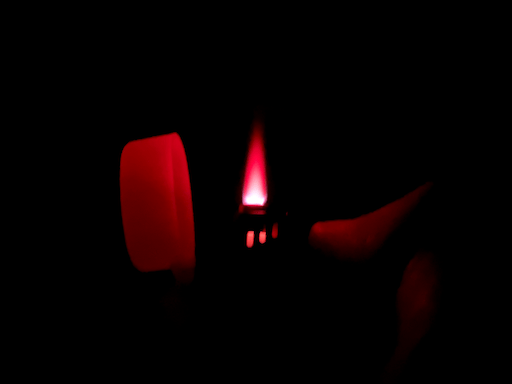
Of the most safe and readily available elements, only two produce a red flame: strontium and lithium. I’m tempted to say they placed a strontium compound on the tines within the lighter, because the red flame is very similar the red flames I have produced with strontium, but they could also have used a lithium compound. The only issue with the theory that lithium was used is that lithium typically produces a more magenta flame rather than the deep red of this lighter.
Yellow

It could be said that the yellow flame in this lighter is nothing more than the regular yellow flame found in basic lighters, however, this lighter has a torch flame (which should be blue), besides the fact that this yellow hue reminds me of sodium flames. If you also consider the cheapness of sodium, it would seem highly likely that they placed a sodium alloy or salt somewhere in the lighter.
Green
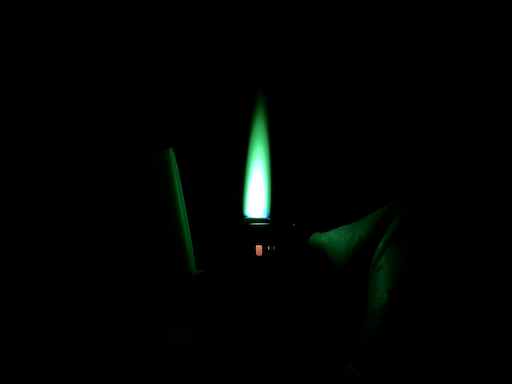
Many elements cause a flame to turn green, however, the fact that a reddish metal bead is attached to the tines in this lighter confirms my theory that metallic copper is used to alter the color of this lighter.
Which colored lighter is your favorite?
 Onward American