
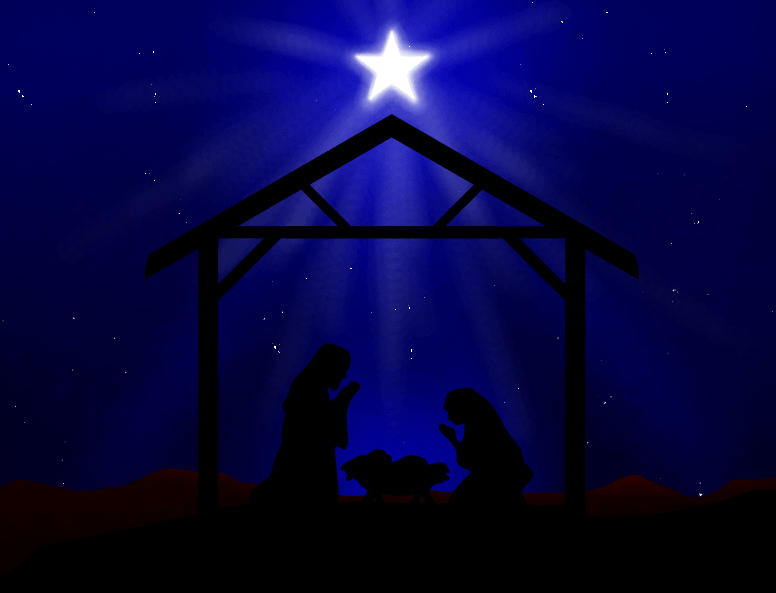
Christmas is now upon us; this is the day on which we celebrate and remember the birth of the long awaited savior: Jesus.
It likely comes as no surprise, but in the same way that I am dissatisfied until I listen to the classic patriotic music that retains the true American spirit, I am also dissatisfied with most Christmas music, as much of it I find to be empty. It wasn’t until recently that I realized the type of Christmas songs I enjoy are Christmas hymns.
To help you celebrate the birth of the savior this year, let’s hearken back to the traditional, timeless hymns which sing about the meaning of Christmas.
Here are some of my most favorite Christmas hymns:
- Hark, the Herald Angels Sing
- O Come All Ye Faithful
- O Holy Night
- Joy to the World
- O Little Town of Bethlehem
- What Child is This
- O Come, O come, Emmanuel
- Silent Night
- Go Tell It on the Mountain
- Angels We Have Heard on High
- The First Noel
Hark, the Herald Angels Sing
This classic hymn was originally written by Charles Wesley in 1739, however, in the 1800s, George Whitefield and Felix Mendelssohn wrote the tune and lyrics that we all know today.
Hark! the herald angels sing,
“Glory to the newborn King:
Peace on earth, and mercy mild,
God and sinners reconciled!”
Joyful, all ye nations, rise,
Join the triumph of the skies;
With th’ angelic hosts proclaim,
“Christ is born in Bethlehem!”
Hark! the herald angels sing,
“Glory to the newborn King”
Christ, by highest heaven adored,
Christ, the everlasting Lord,
Late in time behold him come,
Offspring of the virgin’s womb:
Veiled in flesh the Godhead see;
Hail th’ incarnate Diety,
Pleased with us in flesh to dwell,
Jesus, our Immanuel.
Hark! the herald angels sing,
“Glory to the newborn King”
Hail the heaven-born Prince of peace!
Hail the Son of righteousness!
Light and life to all he brings,
Ris’n with healing in his wings.
Mild he lays his glory by,
Born that we no more may die,
Born to raise us from the earth,
Born to give us second birth.
Hark! the herald angels sing,
“Glory to the newborn King”
O Come All Ye Faithful
This hymn was originally written in Latin by John Francis Wade in the 1740s and given the name Adeste Fideles. The popular English translation first appeared in print in 1852.
O come, all ye faithful, joyful and triumphant,
O come ye, o come, ye to Bethlehem!
Come, and behold Him, born the King of angels!
O come, let us adore Him;
O come, let us adore Him;
O come, let us adore Him, Christ, the Lord!
Sing, choirs of angels; sing in exultation;
Sing, all ye citizens of heav’n above!
Glory to God, all glory in the highest!
O come, let us adore Him;
O come, let us adore Him;
O come, let us adore Him, Christ, the Lord!
Yea, Lord, we greet Thee, born this happy morning;
Jesus, to Thee be all the glory giv’n!
Word of the Father, now in flesh appearing!
O come, let us adore Him;
O come, let us adore Him;
O come, let us adore Him, Christ, the Lord!
O Holy Night
O Holy Night was written in France in 1847 by Placide Cappeau and was later translated into English in the 1850s.
O holy night, the stars are brightly shining;
It is the night of our dear Savior’s birth.
Long lay the world in sin and error pining,
Till He appeared and the soul felt its worth.
A thrill of hope, the weary world rejoices,
For yonder breaks a new and glorious morn!
Fall on your knees! O hear the angel voices!
O night divine! O night when Christ was born!
O night divine! O night, O night divine!
Joy to the World
Joy to the World was written by English hymn writer Isaac Watts in 1719 and published in his collection called The Psalms of David.
Joy to the world; the Lord is come;
Let Earth receive her King;
Let ev’ry heart prepare him room,
And heav’n and nature sing;
And heav’n and nature sing;
And heav’n and heav’n and nature sing.
Joy to the Earth, the Savior reigns;
Let men their songs employ,
While fields and floods, rocks, hills and plains,
Repeat the sounding joy;
Repeat the sounding joy;
Repeat, repeat the sounding joy.
No more let sins and sorrows grow,
Nor thorns infest the ground;
He comes to make his blessings flow
Far as the curse is found;
Far as the curse is found;
Far as, far as the curse is found.
He rules the world with truth and grace,
And makes the nations prove
The glories of His righteousness,
And wonders of His love;
And wonders of His love;
And wonders, wonders of His love.
O Little Town of Bethlehem
O Little Town of Bethlehem was written in 1868 by Phillips Brooks of Massachusetts, who was inspired by his trip to Bethlehem in 1865.
O little town of Bethlehem,
How still we see thee lie!
Above thy deep and dreamless sleep
The silent stars go by.
Yet in thy dark streets shineth
The everlasting light;
The hopes and fears of all the years
Are met in thee tonight.
For Christ is born of Mary;
And, gathered all above,
While mortals sleep, the angels keep
Their watch of wond’ring love.
O morning stars, together
Proclaim the holy birth,
And praises sing to God the King,
And peace to men on earth.
How silently, how silently,
The wondrous gift is giv’n!
So God imparts to human hearts
And blessings of His heav’n.
No ear may hear His coming,
But in this world sin,
Where meek souls will receive Him still,
The dear Christ enters in.
O holy Child of Bethlehem,
Descend to us, we pray;
Cast out our sin and enter in;
Be born in us today.
We hear the Christmas angels,
The great glad tidings tell;
O come to us, abide with us,
Our Lord Emmanuel!
What Child is This
The lyrics of this hymn were written in 1865 and were later set to the tune of the traditional English folk tune Greensleeves — a song which itself first appeared in England in 1580.
This, this is Christ, the King,
Whom shepherds guard and angels sing:
Haste, haste to bring him laud,
The Babe, the Son of Mary!
Why lies He in such mean estate,
Where ox and ass are feeding?
Good Christian, fear: for sinners here
The silent Word is pleading.
This, this is Christ, the King,
Whom shepherds guard and angels sing:
Haste, haste to bring him laud,
The Babe, the Son of Mary!
So bring Him incense, gold, and myrrh,
Come, peasant, king to own Him.
The King of kings salvation brings;
Let loving hearts enthrone Him.
This, this is Christ, the King,
Whom shepherds guard and angels sing:
Haste, haste to bring him laud,
The Babe, the Son of Mary!
O Come, O come, Emmanuel
This traditional hymn originates from medieval Latin antiphons from the 8th or 9th century, which later appeared as a Latin hymn around the 12th century. The hymn was translated into English by John Mason Neale in 1851. That means this hymn is more than 1,200 years old!
O come, O come, Emmanuel,
And ransom captive Israel,
That mourns in lonely exile here
Until the Son of God appear.
Rejoice! Rejoice! Emmanuel
Shall come to thee, O Israel.
O come, Thou Rod of Jesse, free
Thine own from Satan’s tyranny;
From depths of hell Thy people save,
And give them victory o’er the grave.
Rejoice! Rejoice! Emmanuel
Shall come to thee, O Israel.
O come, Thou Dayspring, from on high,
And cheer us by Thy drawing nigh;
Disperse the gloomy clouds of night,
And death’s dark shadows put to flight.
Rejoice! Rejoice! Emmanuel
Shall come to thee, O Israel.
O come, Thou Key of David, come
And open wide our heav’nly home;
Make safe the way that leads on high,
And close the path to misery.
Rejoice! Rejoice! Emmanuel
Shall come to thee, O Israel.
Silent Night
Silent Night was originally written in German and given the title Stille Nacht. Joseph Mohr wrote the lyrics in 1816 and Franz Xaver Gruber composed it in 1818 — the hymn was first performed on Christmas Eve of 1818 in Oberndorf, Austria.
Silent night, holy night
All is calm, all is bright
Round yon virgin mother and Child
Holy infant so tender and mild
Sleep in heavenly peace
Sleep in heavenly peace
Silent night, holy night
Shepherds quake at the sight
Glories stream from heaven afar
Heavenly hosts sing Alleluia
Christ, the Savior is born
Christ, the Savior is born
Silent night, holy night
Son of God, love’s pure light
Radiant beams from Thy holy face
With the dawn of redeeming grace
Jesus, Lord, at Thy birth
Jesus, Lord, at Thy birth
Go, Tell It on the Mountain
This traditional hymn has existed since at least 1865, but the actual date of its origin is unknown.
Go, tell it on the mountain,
Over the hills and everywhere.
Go, tell it on the mountain
That Jesus Christ is born.
While shepherds kept their watching
O’er silent flocks by night,
Behold throughout the heavens
There shone a holy light.
Go, tell it on the mountain,
Over the hills and everywhere.
Go, tell it on the mountain
That Jesus Christ is born.
The shepherds feared and trembled
When lo! above the earth
Rang out the angel chorus
That hailed our Savior’s birth.
Go, tell it on the mountain,
Over the hills and everywhere.
Go, tell it on the mountain
That Jesus Christ is born.
Down in a lowly manger
The humble Christ was born,
And God sent us salvation
That blessed Christmas morn.
Go, tell it on the mountain,
Over the hills and everywhere.
Go, tell it on the mountain
That Jesus Christ is born.
Angels We Have Heard on High
This hymn is a combination of the French carol Les Anges dans nos Compagnes with English lyrics that were written by James Chadwick in the 1860s. Did you know that the chorus gloria in excelsis Deo is a Latin phrase meaning glory to God in the highest?
Angels we have heard on high,
Sweetly singing o’er the plains,
And the mountains in reply
Echoing their joyous strains.
Gloria in excelsis Deo.
Gloria in excelsis Deo.
Shepherd, why this jubilee?
Why your joyous strains prolong?
What the gladsome tidings be
Which inspire your heav’nly song?
Gloria in excelsis Deo.
Gloria in excelsis Deo.
Come to Bethlehem and see
Him whose birth the angels sing.
Come, adore on bended knee
Christ the Lord, the newborn King.
Gloria in excelsis Deo.
Gloria in excelsis Deo.
See him in a manger laid,
Whom the choirs of angels praise.
Mary, Joseph, lend your aid
While our hearts in love we raise.
Gloria in excelsis Deo.
Gloria in excelsis Deo.
The First Noel
The modern lyrics to this song first appeared in print in 1823, however, the song may date back as far as the 13th or 14th century.
The first Noel, the angel did say
Was to certain poor shepherds in fields as they lay,
In fields where they lay keeping their sheep,
On a cold winter’s night that was so deep.
Noel, Noel, Noel, Noel,
Born is the King of Israel.
They looked up and saw a star
Shining in the east beyond them far;
And to the earth it gave great light,
And so it continued both day and night.
Noel, Noel, Noel, Noel,
Born is the King of Israel.
And by the light of that same star
Three wise men came from country far;
To seek for a king was their intent,
And to follow the star wherever it went.
Noel, Noel, Noel, Noel,
Born is the King of Israel.
The star drew nigh to the northwest;
O’er Bethlehem it took its rest,
And there it did both stop and stay,
Right over the place where Jesus lay.
Noel, Noel, Noel, Noel,
Born is the King of Israel.
Then entered in those wise men three,
Full reverently upon their knee,
And offered there in his presence
Their gold, and myrrh, and frankincense.
Noel, Noel, Noel, Noel,
Born is the King of Israel.
Then let us all with one accord
Sing praises to our heavenly Lord,
That hath made heaven and earth of nought,
And with his blood our life hath bought.
Noel, Noel, Noel, Noel,
Born is the King of Israel.
Have a merry Christmas and a blessed new year!
What is your favorite Christmas hymn?
Onward American 🇺🇸
Laus Deo soli.
Source: Hark The Herald Angels Sing Lyrics
Source: O Come All Ye Faithful Lyrics
Source: Joy to the World Lyrics
Source: O Little Town of Bethlehem Lyrics
Source: What Child is This Lyrics
Source: O Come, O Come, Emmanuel Lyrics
Source: Go, Tell It on the Mountain Lyrics
 Onward American