
This year marks the 250th anniversary of the beginning of the First War of Independence, which is now known as the Revolutionary War. From the Battles of Lexington and Concord in April of 1775 to the battle of Bunker Hill in June of 1775, many significant events that built our nation and the American spirit are now 250 years old.
To commemorate this great milestone, I felt it was appropriate to honor the valiant men who unrelentingly fought for their home and fearlessly faced death in the name of freedom. With a firm reliance on God, these patriots secured a seemingly impossible victory, however, many of them would never return home. It is with great reverence that I wish to honor these patriots with this post.
It is impossible to list every man who sacrificed for this great nation, but my honor and thanks go out to each and every one of them, renowned and unsung.
I wanted to share this list of veterans of the Revolutionary War, which I procured from Time.com.
The 8 daguerreotypes were found and the men in the daguerreotypes were identified by Joseph Bauman, whose 8 daguerreotype collection was apparently the world’s largest collection of daguerreotypes of veterans of the Revolutionary War. Bauman not only shared the photographs of these men, but also the history that he discovered about them in his e-book Don’t Tread on Me: Photographs and Life Stories of American Revolutionaries, which took Bauman over three decades to compile.
The last 5 photographs were CDV card photographs of Revolutionary War veterans which were taken in 1864 when Reverend E. B. Hillard traveled across New England and New York to interview the veterans. Rev. Hillard was accompanied by two brothers, N. A. Moore and R. A. Moore, who captured the photographs of the veterans. Rev. Hillard published his book The Last Men of the Revolution in 1864, which contains the those photographs and interviews. Rev. Hillard reasoned why it was so important that he obtained these photographs, saying “Possible now it will soon be impossible forever, and now neglected it would be forever regretted.”
Peter Mackintosh
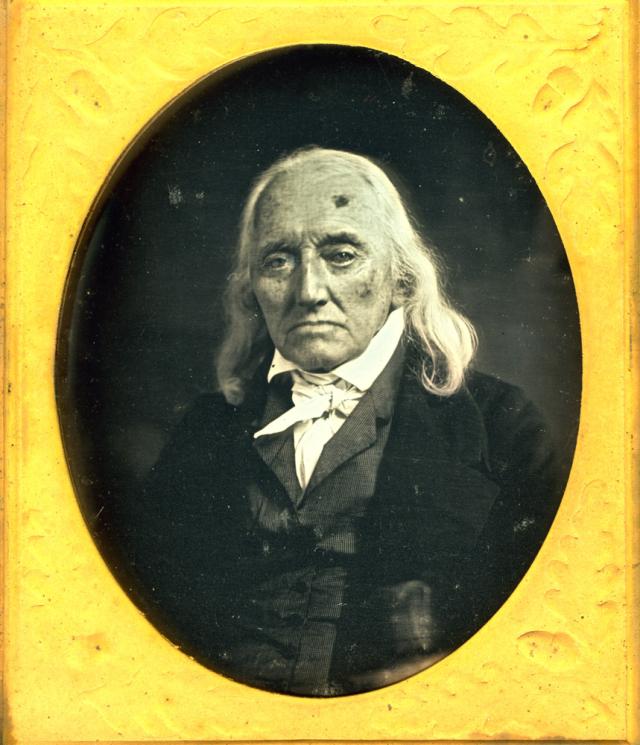
On the night of December 16, 1773, sixteen-year-old Mackintosh was woking in his master’s blacksmith shop in Boston when some young men rushed into the shop and rubbed ashes on their faces. Shortly after Mackintosh witnessed this, those men dumped tea in the Boston harbor; he had witnessed the Boston Tea Party. Mackintosh went on to serve in the Continental Army shoeing horses and repairing cannons. There was even a mortar that Mackintosh repaired which General George Washington personally oversaw. Mackintosh died in 1846 at the age of 89.
Simeon Hicks
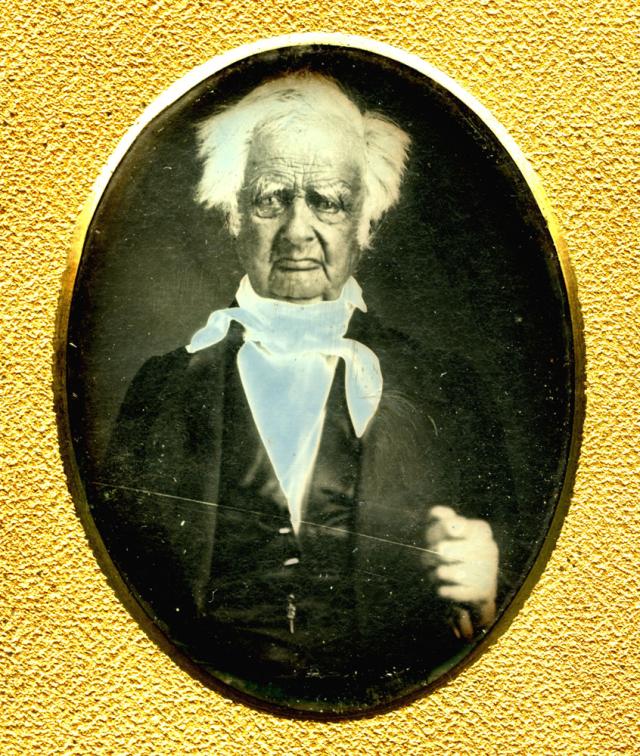
Hicks served as a Minuteman from Rehoboth, Massachusetts. After learning about the Battles of Lexington and Concord, Hicks, along with thousands of other Minutemen, marched to Boston, where they held the British in a siege. On August 16, 1777, Hicks fought in the Battle of Bennington; Hicks was the last survivor of the Battle of Bennington.
Jonathan Smith
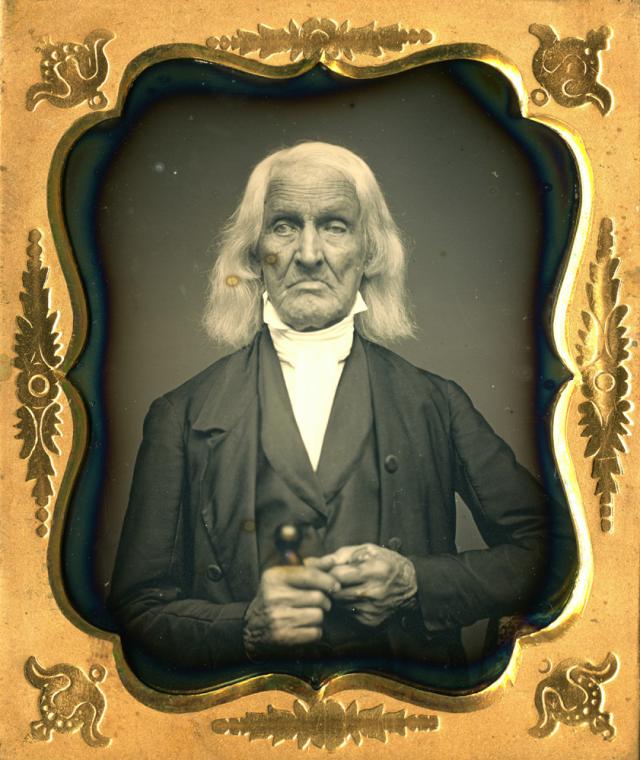
Smith was born on March 10, 1761. Smith fought in the Battle of Long Island in 1778, in fact, Smith’s unit was the first unit sent to Long Island; after the war, Smith became a Baptist minister. The daguerreotype of Smith was taken in order to be given to his granddaughter as a gift; it was taken on October 20, 1854, making Smith 93 years old in the image.
George Fishley
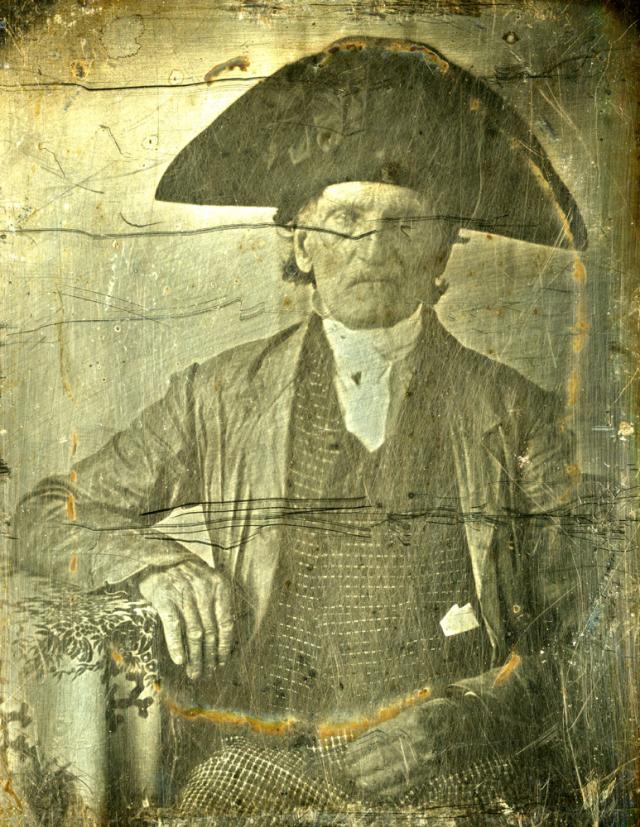
Fishley served as a soldier in the Continental Army. It was during this time that Fishley became involved in the Battle of Monmouth as the Continental Army attacked the British army while they were evacuating Philadelphia and retreating to New York City. Fishley later served on a privateer ship and was eventually captured by the British. After the war, Fishley became famous in the city in which he lived — Portsmouth, New Hampshire. Fishley was known for wearing his Continental Army hat, which he wore while marching in parades; Fishley is even wearing the hat in his photograph.
James W. Head
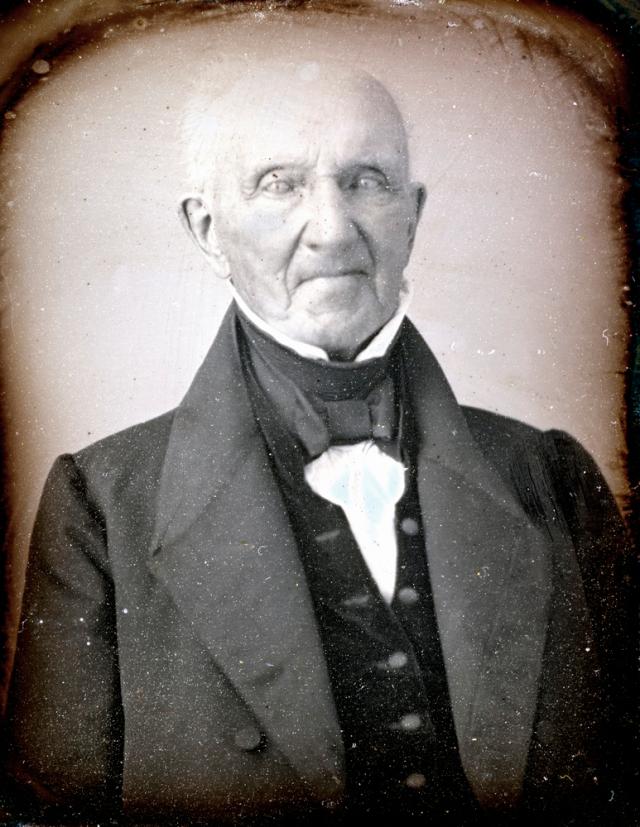
Head joined the Continental Navy at the age of 13 and served as a midshipman aboard the frigate Queen of France. Several vessels, including the Queen of France, were strategically sunk when the British attacked Charleston, South Carolina, in order to better fortify the city. Head and the other sailors fired the artillery at the British from the forts, however, they were captured when the Americans surrendered to the British in one of the most devastating defeats of the war. Head was released at Providence, Rhode Island, after which he walked home to Boston. When Head arrived home, it was discovered that he had lost most of his hearing due to the concussion of the cannons he fired to defend Charleston. Head later settled in a remote portion of Massachusetts, which eventually became Maine; Head was even elected as a delegate to the Massachusetts convention in Boston, which was called to ratify the Constitution. At the time of Head’s death, he was the richest man in Warren, Maine, but also completely deaf from the damage he sustained while serving in the Continental Navy.
Reverend Levi Hayes
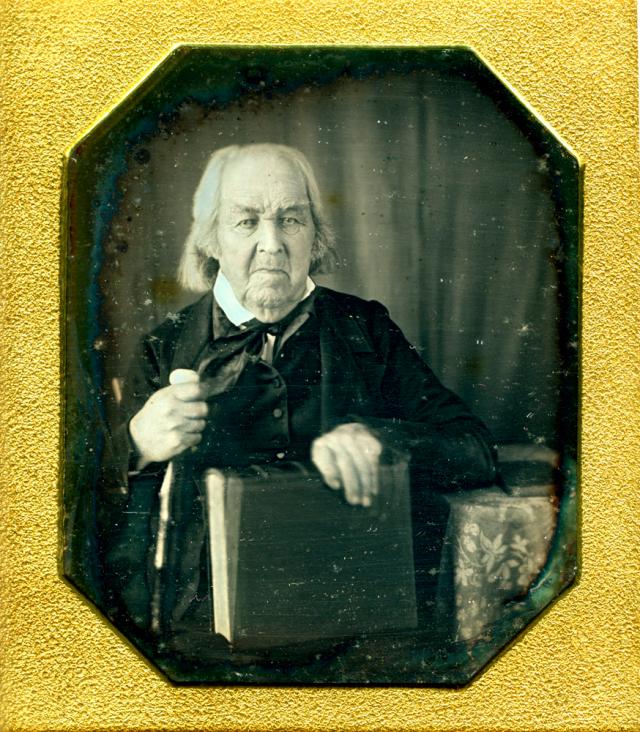
Rev. Hayes was a fifer in a Connecticut regiment which headed toward West Point in order to defend it from an impending attack. In the early nineteenth century, Rev. Hayes helped organize a land company that headed into the wilderness of what was then considered the West. Rev. Hayes helped settle Granville, Ohio, where he served as the township treasurer and a deacon of his church.
Daniel Spencer
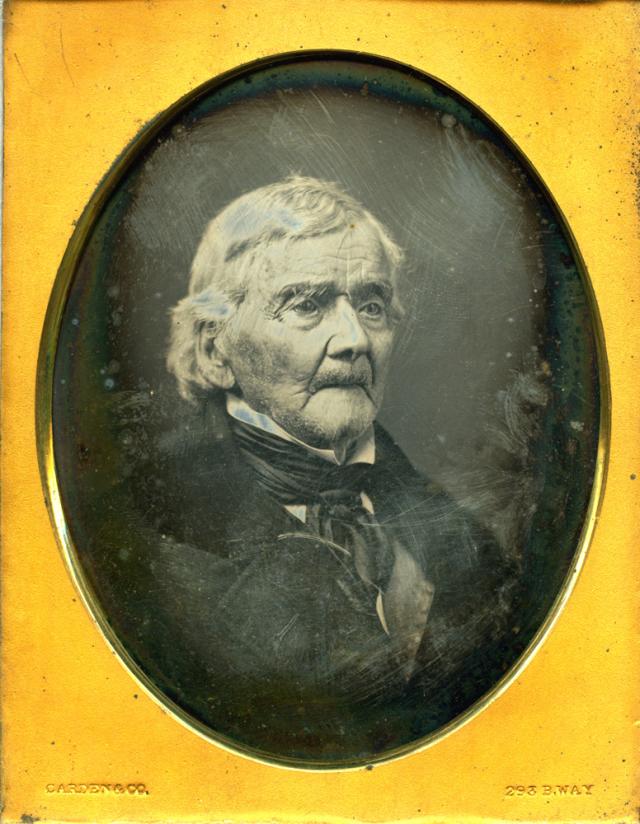
After Benedict Arnold had defected to the British, Spencer served as one of the backup troops sent to cover the operatives in a secret mission to capture Arnold; the operation ultimately failed as Arnold moved his headquarters. Spencer also served as a member of the elite Sheldon’s Dragoons. Spencer was the guest of honor during New York City’s Independence Day celebration on July 4, 1853.
Doctor Eneas Munson

As a boy, Dr. Munson knew Nathan Hale, the young American spy who was executed by the British. Dr. Munson helped care for the wounded when the British invaded his hometown of New Haven, Connecticut. When Dr. Munson was 16, he was commissioned as a surgeon’s mate, which was shortly before he graduated from Yale. Dr. Munson was involved in General Washington’s great sweep to Yorktown, Virginia, where British General Cornwallis surrendered, leading to the American victory of the Revolutionary War. During the Battle of Yorktown, Dr. Munson witnessed the actions of General Washington, General Knox, and Colonel Alexander Hamilton. Dr. Munson gave up medicine after the war, instead becoming a wealthy businessman. Dr. Munson loved recalling his adventures serving as a teenage officer in the war.
Samuel Downing
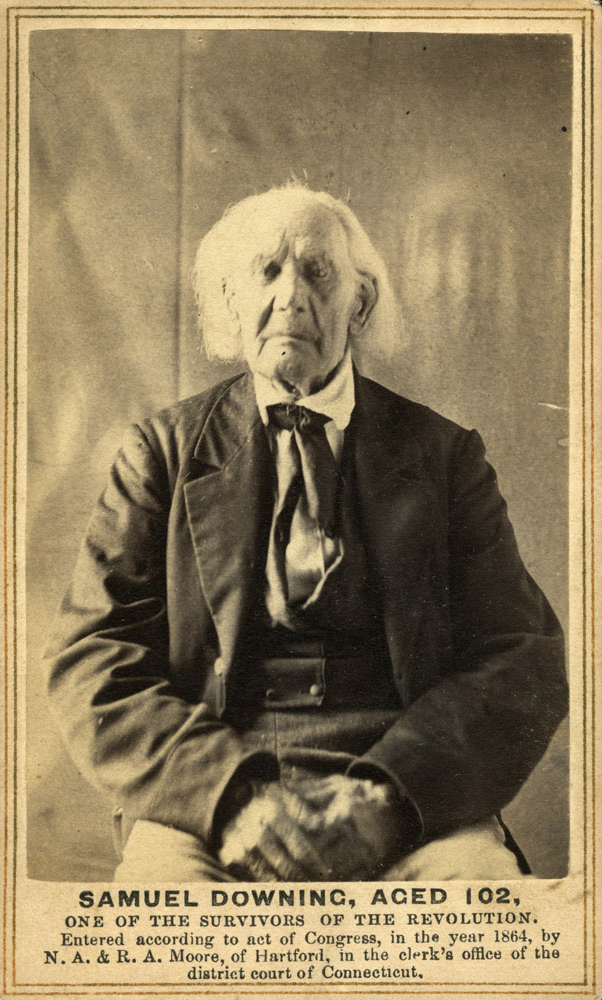
Samuel Downing of New Hampshire was only 16 when he enlisted. He was 102 years old and living in Edinburgh, New York, at the time of his photograph. Downing passed away in early 1867; incredibly, this means that he not only outlived the Revolutionary War, but also the War of 1812, the Mexican-American War, and the Civil War.
Reverend Daniel Waldo
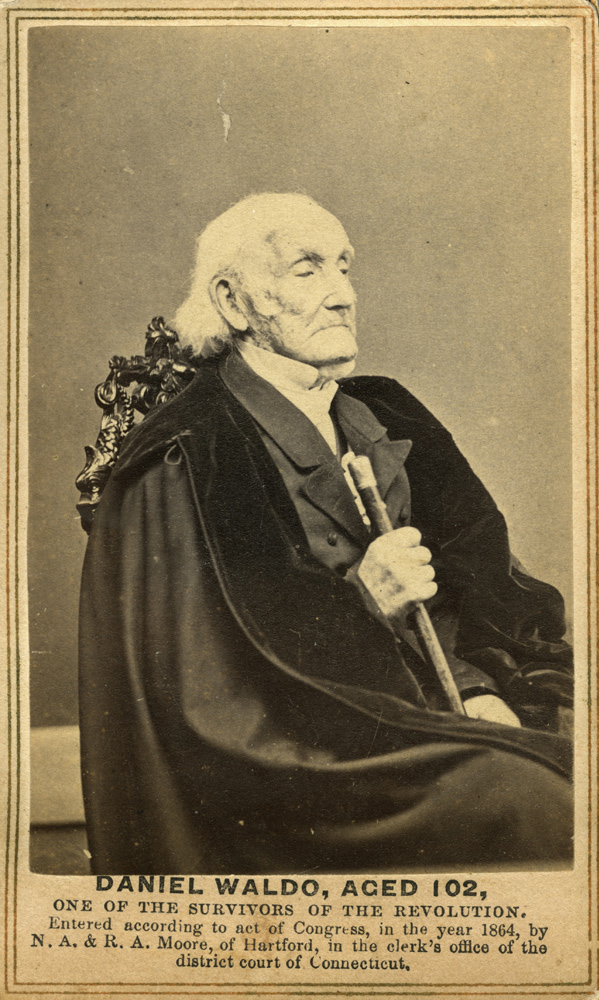
In 1778, Rev. Waldo was drafted for a month of service, and after he completed that, Rev. Waldo enlisted for another eight months. In early 1779, Rev. Waldo was taken prisoner by the British at Horseneck. Once Rev. Waldo was released, he returned home in Windham and started farming again. Rev. Waldo was 102 years old when his photograph was taken.
Lemuel Cook
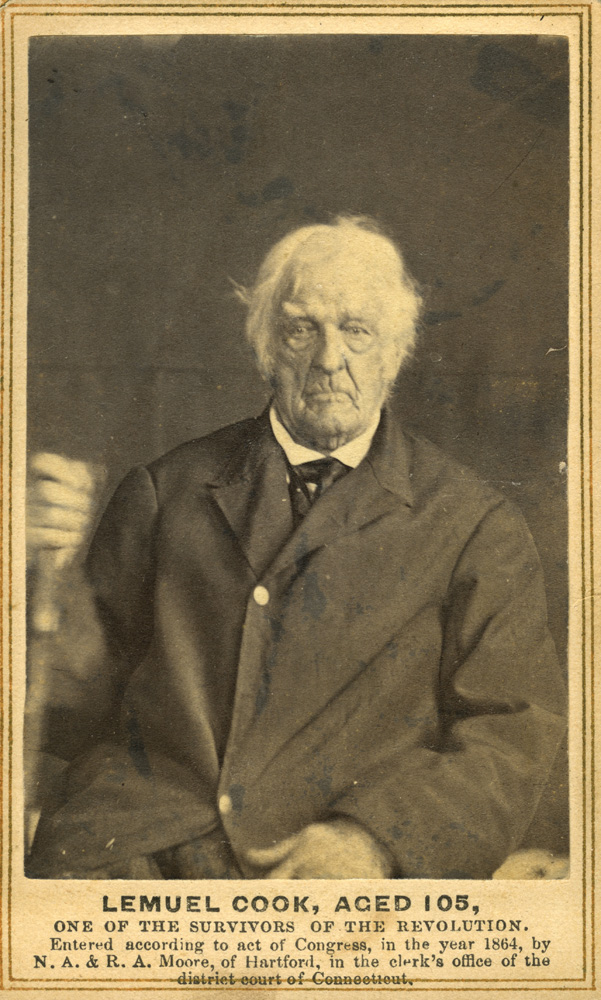
When Cook had his photograph taken in 1864, he was 105 years old. Cook witnessed the British surrender at Yorktown, which is when the Americans effectively won the war. After the British surrendered, Cook recalled “Washington ordered that there should be no laughing at the British; said it was bad enough to surrender without being insulted. The army came out with guns clubbed on their backs. They were paraded on a great smooth lot, and there they stacked their arms.”
Alexander Milliner
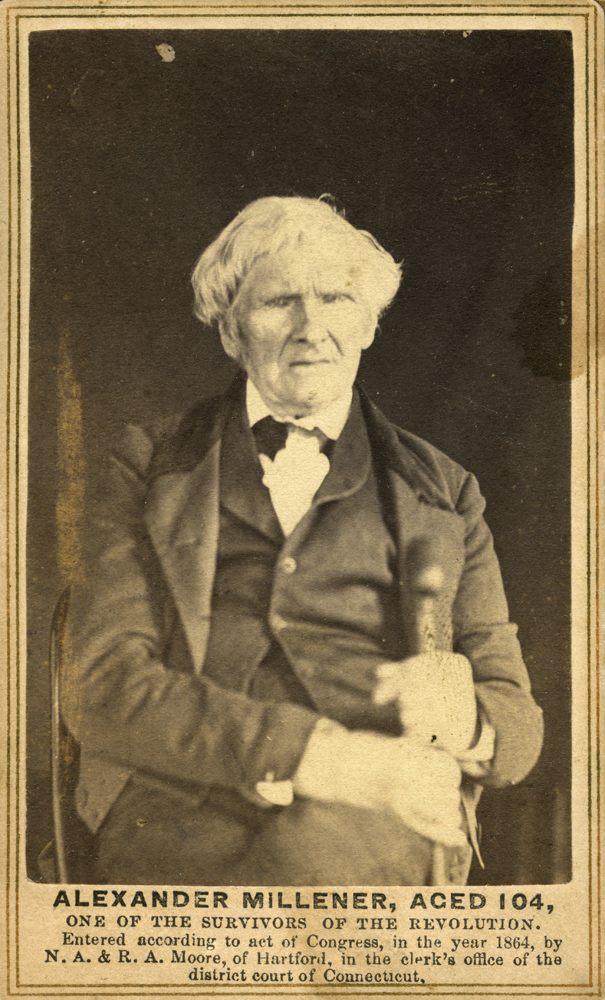
During the Revolutionary War, Milliner served as a drummer boy in General Washington’s Life Guard unit. Milliner was favored by Washington who often requested for Milliner to play. Milliner also witnessed the British surrender at Yorktown, of which the 104 year old Milliner recollected “The British soldiers looked down-hearted. When the order came to ‘ground arms,’ one of them exclaimed, with an oath, ‘You are not going to have my gun!’ and threw it violently on the ground, and smashed it.”
William Hutchings
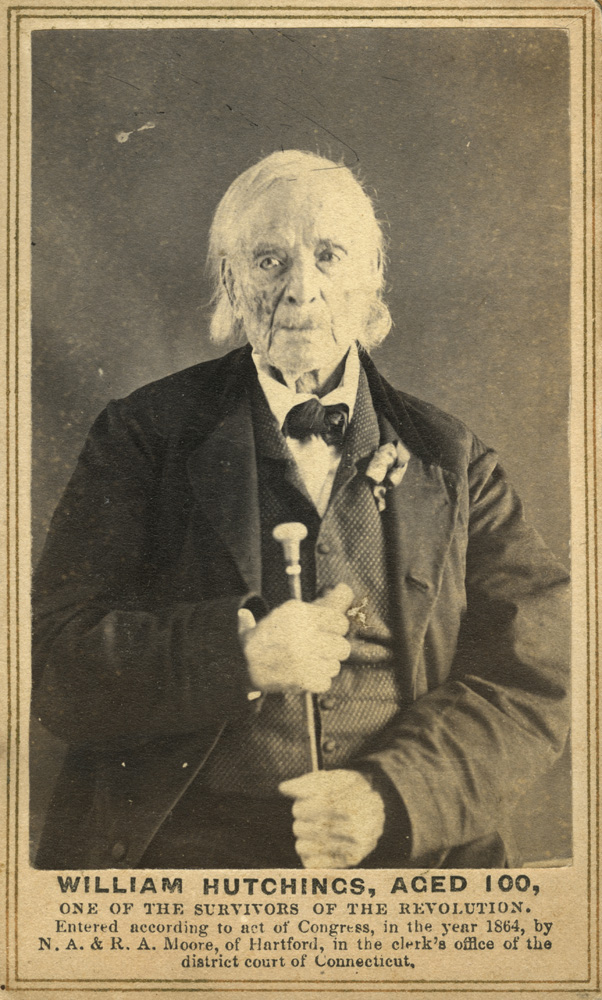
At the age of 15, Hutchings enlisted for the coastal defense of his home state of New York. In The Last Men of the Revolution, Reverend E. B. Hillard wrote about Hutchings “The only fighting which he saw was the siege of Castine, where he was taken prisoner, but the British, declaring it a shame to hold as prisoner one so young, promptly released him.”
What are your thoughts about the photographs of the men who fought the Revolutionary War?
Onward American 🇺🇸
Source: Faces of the American Revolution
Source: Don’t Tread on Me: Photographs and Life Stories of American Revolutionaries
 Onward American