
We all know that the sun rises and sets once per day, and therefore there is only one daytime and one nighttime per 24 hours, but did you know that it could be argued that this basic explanation is incorrect?
The most prominent exception to that basic definition is that the arctic and antarctic experience virtually no sunsets during their summer and virtually no sunrises during their winter; clearly, we must define day by something more stable than the rising and setting of the Sun; one day is defined as lasting for 24 hours, which is roughly equivalent to the rotation of the Earth.
However, if we consider the part of a day known as daytime, which is defined as the time of the day between sunrise and sunset, we can see that the definition of daytime is a little less rigid than that of day, butthis still means that there should only be one daytime and one nighttime per day.
If we slightly alter the definitions and say that a portion of the Earth experiences daytime when it is facing the Sun and it experiences nighttime when it is completely shadowed from the Sun, then what we conventionally call night would still be considered night, since the opposite side of the Earth is shadowing that side of the Earth from the Sun, and most of the time what we conventionally call day would be considered day, since that side of the Earth is directly facing the Sun, but there is one event that recently happened which would be a notable exception: April 8, 2024.
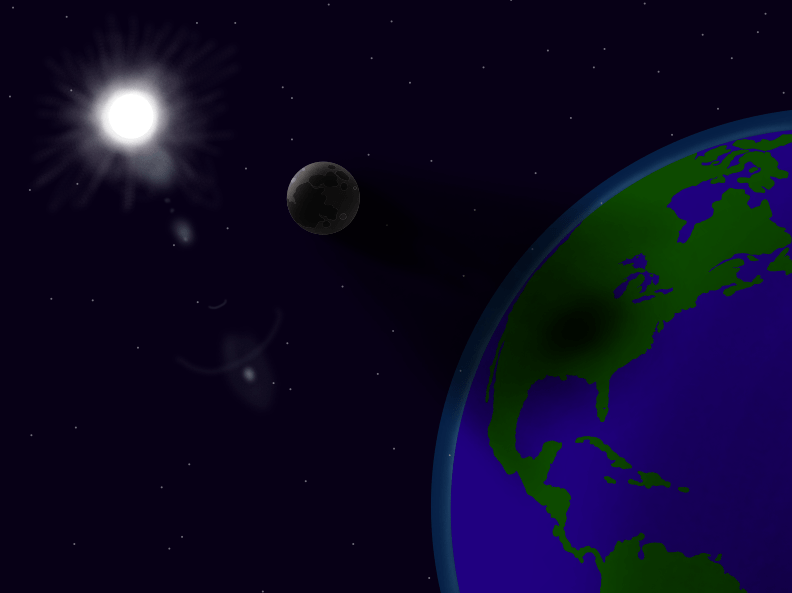
On April 8, 2024, the Moon shadowed part of North America from the Sun for 4 minutes or less, depending where along the path of totality you consider. This shadow of the Moon caused the Sun to disappear and reappear a few minutes later for the portion of the Earth along the path of totality, a phenomenon we call a total solar eclipse, however, this eclipse could be thought of as a short lived nighttime, since portions of the Earth were shadowed from the Sun.
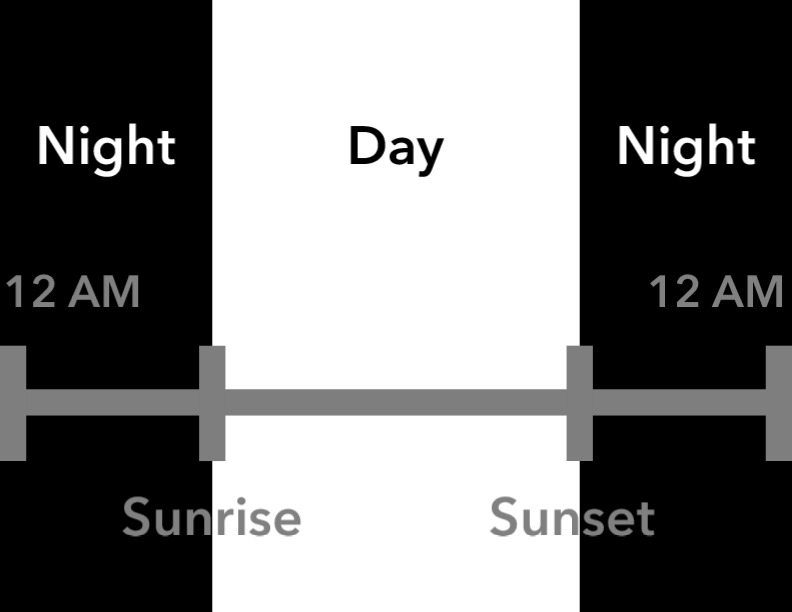
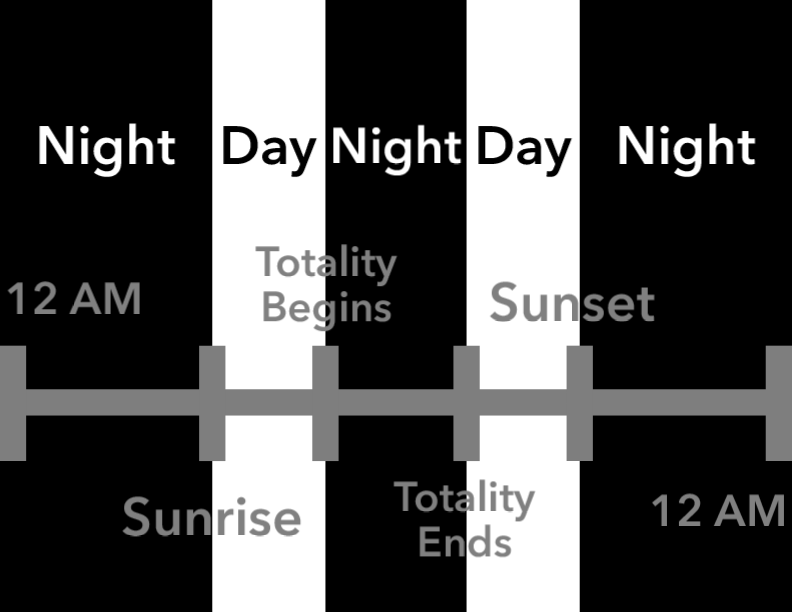
As you can see, most days begin at midnight with a nighttime, then they experience a daytime, followed by another nighttime, but April 8 began with a nighttime, followed by a daytime that ended at totality, which brought another nighttime, which faded into another daytime, which finally led to yet another nighttime; that makes 3 nights and 2 days all within 24 hours.
I suppose this isn’t the most correct way to define the times of the day, but it certainly makes a more interesting timeline for April 8.
Did you see the total solar eclipse, and if so, how did you enjoy your 3 nights and 2 days in 24 hours?
 Onward American