

Believe it or not, the United States has not admitted every state that has been proposed. Many states have been proposed with many differing borders, some of which are still being proposed; the fifty states that currently exist, besides the first thirteen that ratified the constitution, were only admitted into the Union when the proposal of statehood was approved by Congress and the territorial or state government.
There are too many proposed states to discuss in this post, however, I will list some of the more interesting of such.
Transylvania

Only a short time before the Thirteen Colonies declared independence, a man named Richard Henderson purchased land from the Cherokees and founded the colony of Transylvania. Henderson hoped that the British would recognize his colony and allow him to rule it similar to William Penn and Pennsylvania, hence Pennsylvania: Penn (William Penn) and the Latin silva (woods) meaning Penn’s Woods. The name Transylvania itself comes from the Latin trans- (across, beyond) and silva (woods), although Henderson’s reasons for giving his colony this name is unclear.
If Transylvania Colony had been recognized, there may have been fourteen colonies that declared independence from Britain, but the Transylvania Purchase was illegal under British law, besides the fact that Transylvania was within the previously claimed boundaries of the colonies of Virginia and North Carolina. Virginia annulled the Transylvania Purchase and reclaimed the land for itself; the land of the unofficial Transylvania Colony is now part of Kentucky and Tennessee.
Westsylvania
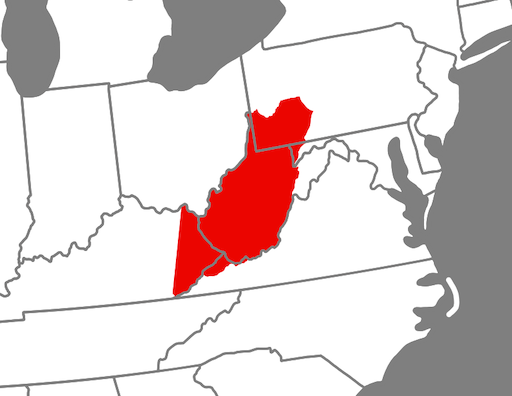
Westsylvania was one of the several proposed states that wished to become the fourteenth state. Westsylvania’s petition for statehood in 1776 was ignored by Congress, allowing the surrounding states of Virginia and Pennsylvania to absorb Westsylvania’s claimed territory.
Some residents of the former Westsylvania were not willing to relinquish this unofficial state and considered seceding to form Westsylvania regardless, that is until Pennsylvania passed a law declaring such consideration of secession as treason that is punishable by execution. Westsylvania’s land now constitutes West Virginia, Pennsylvania, and Kentucky.
Franklin
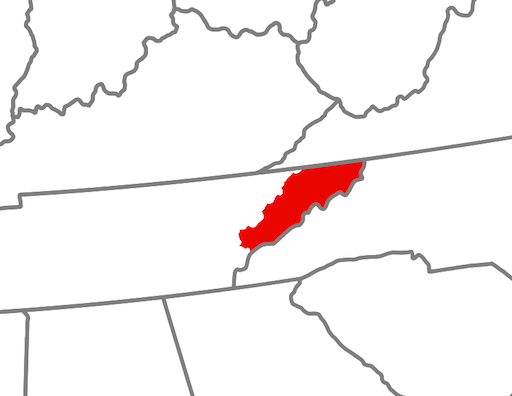
After the closing of the Revolutionary War, many states gifted their westernmost sections to the Federal Government, which was in desperate need of money after the grueling war; the government sold this land to westbound settlers. Some combination of this fact along with questionable land deals caused residents of western North Carolina, modern day Tennessee, to worry about the uncertainty of whom would gain jurisdiction of their land, which prompted these residents to form the own state of Franklin, however, they were two votes away from the 2/3 majority in Congress that was necessary to be admitted into the Union. The government of Franklin quickly collapsed thereafter; the land of Franklin was returned to North Carolina.
Madawaska

Ambiguity in the wording of the Treaty of Paris (1783) regarding the border between the US State of Maine and the British Colony of New Brunswick resulted in a 59 year long dispute over a large portion of land. In the year 1827, American activist John Baker made a unilateral declaration establishing the Republic of Madawaska from land disputed between the US and UK as an American territory, which caused the British to send Baker to jail for high treason. Hopes of the admittance of the state of Madawaska were dissolved when the Webster-Ashburton Treaty solidified the Maine-New Brunswick border.
Superior

For many years and several, varying reasons, residents of the Upper Peninsula of Michigan have proposed separating from the Lower Peninsula. The first of these proposals was in 1858 when a meeting was held in Ontonagon, Michigan, to combine the Upper Peninsula with northern Wisconsin and northeastern Minnesota to form the state that would either be called Superior or Ontonagon. The plans to establish the state of Superior were unsuccessful to this day, though the idea of the Upper Peninsula’s secession has been brought up again in recent years.
Thomas Jefferson also proposed a similar state when he suggested that the peninsula that is now the Upper Peninsula of Michigan should become the state of Sylvania.
Jefferson

The quest for the state of Jefferson has been long and fruitless as four, individual regions have attempted to form this state, though ineffective to this day.
In 1859, portions of the territories of Nebraska, Kansas, New Mexico, and Utah were claimed by the potential state of Jefferson, to which the Kansas government consented, but the citizens of Jefferson were unable to agree on a constitution; Jefferson would continue to loosely exist as Jefferson Territory until it dissolved itself a few months after the organization of Colorado Territory, which claimed much of Jefferson Territory.
In 1870, it was suggested that an area of Texas should be admitted as the new state of Jefferson, which was not taken very seriously. Another area of Texas was suggested to be admitted as the state of Jefferson in 1915, but with little support.
The most recent proposal was in 1941 when parts of northern California and southern Oregon attempted to form the state of Jefferson, though this attempt was mostly forgotten when Japan attacked Pearl Harbor. This proposal of statehood has regained some popularity as recently as 2016, persuading more counties to join the movement.
Scott

When Tennessee seceded from the Union in 1861, residents of Scott County, Tennessee, were left displeased with their parent state’s joining the Confederate States. The citizens of Scott County were disinterested in their involuntary admittance to the Confederacy, especially since they were neither plantation holders nor enslavers. Scott County decided to secede from Tennessee and form the Free and Independent State of Scott to remain a Union State, though Tennessee ignored their proclamation and Congress never approved the state of Scott, therefore the state would remain unofficial.
The state of Scott would remain quiescent until 1986 when it formally requested to be readmitted to Tennessee after 125 years of deeming itself independent; despite the fact that Tennessee never recognized Scott’s independence, and that Scott had always been included in Tennessee’s affairs since Reconstruction, Tennessee welcomed Scott back and even held a celebration.
Nickajack

Another region to attempt to secede from their state after joining the Confederacy was Nickajack; the residents of this proposed state that claimed eastern Tennessee and northern Alabama wished to become independent particularly because its residents were not rich enough to own large tracts of land.
Unlike Scott, Nickajack did not simply declare itself an independent state but attempted to separate legally, though the idea of separation was abandoned after Tennessee and Alabama formally joined the Confederate States as it was considered too dangerous for Nickajack to leave the Confederacy.
Lincoln

Like Jefferson, there have been multiple attempts to admit the state of Lincoln into the Union. The first proposal was an area of Texas south and west of the Colorado River would be admitted as the state of Lincoln, however, this plan never amounted to anything.
Another proposal for the state of Lincoln was during the development of the territories of Washington, Idaho, and Montana, when it was unclear if the land that would become the panhandle of Idaho would be appended to Idaho Territory or Montana Territory. In the midst of the uncertainty, this disputed portion of land petitioned for statehood, which ultimately failed. The proposal was reintroduced in the early twentieth century, but this time including a chunk of Washington State, which also failed, though this movement for the state of Lincoln has not entirely disappeared.
Absaroka

In the year 1939, the residents of swaths of Wyoming, Montana, and South Dakota had attempted to be admitted as the 49th state, the state of Absaroka, which was named after the Absaroka Range of the Rocky Mountains. The residents never came to Congress to propose statehood, but they did manage to make Absaroka license plates and an Absaroka State flag; they even held a 1939 Miss Absaroka beauty pageant.
The man leading the movement of Absaroka’s statehood was Sheridan, Wyoming, street commissioner A. R. Swickard who declared himself the Governor of Absaroka; Swickard went as far as hearing grievances from the populace. The United States’ entering of World War Two took priority over Absaroka’s statehood which diverted people’s interest. Absaroka eventually became forgotten and disappeared completely. Alaska would become the 49th state, not Absaroka.

Which of these proposed states is your favorite?
 Onward American